Best Property Management Software in Uganda: A Complete Comparison Guide
RentEase Team
1 June 2026
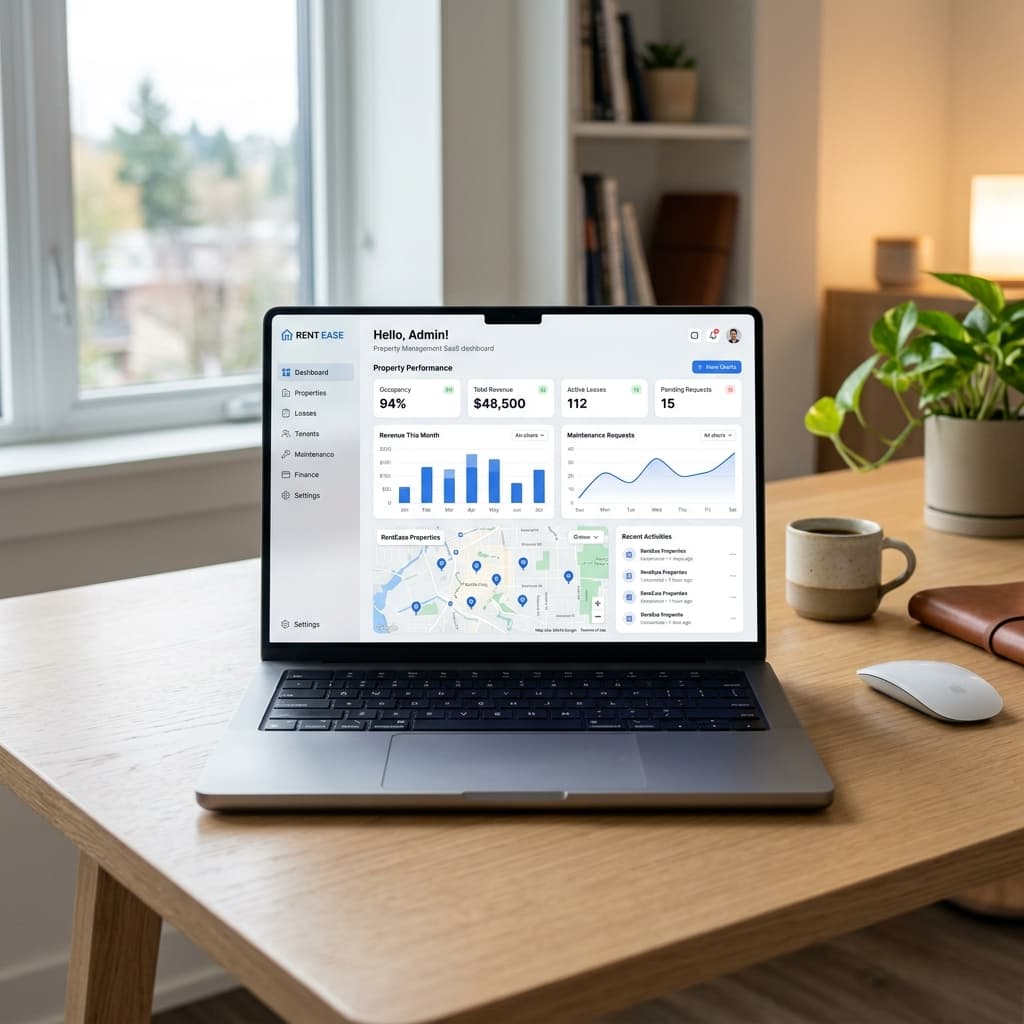
Uganda's real estate market keeps expanding, driven by demand for residential apartments and commercial space in Kampala, Wakiso and Mukono. Managing property has got more complicated at the same rate.
Landlords can no longer afford to manage units using chaotic paper files, unrecorded WhatsApp threads, and fragile spreadsheets. But when looking for a solution, what are the actual options available in Uganda, and how do they compare?
In this article, we compare the top property management methods and tools in Uganda to help you choose the best option for your portfolio, whether that portfolio is two hundred units or four.
1. RentEase Uganda: The Modern, Localised Platform
RentEase Uganda is designed specifically for the Ugandan and East African real estate context. It bridges the gap between global technology standards and local payment preferences.
Key Features
- Deep Mobile Money Integration: Tenants pay rent directly via MTN MoMo and Airtel Money, and the system automatically matches payments, updates the ledgers, and generates PDF receipts. See our guide to collecting rent via mobile money in Uganda for how that flow works in practice.
- Lease and Document Storage: Store digital tenancy agreements compliant with the Landlord and Tenant Act 2022.
- Identity Records: National ID and passport details are captured and stored against the tenancy alongside supporting documents. No platform in this market queries the NIRA register for you, because that interface is gated behind a signed MoU and reserved for banks and telecoms. The verifying is still your job. See our guide to tenant screening and verification in Uganda.
- Maintenance Ticketing: Tenants submit repair requests with photos, and landlords assign caretaker workflows.
- Granular Permissions: Allow caretakers and accountants restricted access to relevant sections of your portfolio.
Pros
- Built explicitly for Uganda (supports local payment methods and complies with local tenancy laws).
- High tenant adoption because of mobile money ease.
- Automated reminders reduce late payments significantly.
Cons
- Focuses primarily on landlords and property managers in East Africa, rather than global markets.
2. Generic Global Software (AppFolio, Buildium)
AppFolio, Buildium, and TenantCloud are world-class property management platforms built for property managers in North America and Europe.
Key Features
- Online rental applications.
- Credit checks and background screening.
- Owner portals and bank reconciliation.
- Automated maintenance coordination.
Pros
- Rich features with decade-long development histories.
- Excellent integrations with Western accounting software.
Cons
- No Mobile Money Support: These systems rely on credit cards, ACH, or bank transfers. They do not support MTN MoMo or Airtel Money checkout.
- Legal Mismatch: Background checks and eviction tracking are configured for foreign legal frameworks, rendering them useless in Uganda.
- High Cost: Priced in USD with high minimum monthly fees, making them prohibitively expensive for small-to-medium portfolios in Uganda.
3. Manual Excel Spreadsheets / Google Sheets
Many independent landlords in Kampala still rely on Excel spreadsheets or Google Sheets to track their properties. We have written at length about why spreadsheets fail Ugandan landlords; here is the short version.
Key Features
- Free-form ledgers.
- Manual data entry.
- Custom formulas for rent totals.
Pros
- Zero software subscription costs.
- Completely customisable.
- Highly familiar interface.
Cons
- No Automation: Spreadsheets cannot send rent reminders, generate invoices, or collect payments.
- High Error Rate: The research literature on operational spreadsheets consistently finds that the large majority contain at least one error, commonly cited at around 88%, with some studies putting it higher still. Those errors cause financial discrepancies and tax filing problems, and you rarely know which cell is wrong.
- Collaboration Risks: Sharing files via WhatsApp or Google Drive compromises tenant privacy and lacks audit logs.
4. Traditional Real Estate Management Agencies
Many landlords outsource management to local real estate firms who handle tenant acquisition, maintenance, and collection manually.
Key Features
- Full-service physical property management.
- Caretakers on site.
- Hand-delivered rent invoices.
Pros
- Fully hands-off experience for the property owner.
- Physical presence on the property to inspect repairs.
Cons
- High Fees: Agencies typically charge between 5% and 10% of gross monthly rent, eating into your property's net profit margins.
- Lack of Transparency: Landlords are often kept in the dark about the exact status of maintenance costs and vacancy rates until the monthly statement arrives.
- Vulnerability to Fraud: Manual agencies are susceptible to accounting errors or caretakers collecting cash rent without reporting it immediately.
Comparison Summary
RentEase Uganda
- MTN & Airtel MoMo: Yes, fully integrated.
- Local legal compliance: Yes, built around the Landlord and Tenant Act 2022.
- Automated reminders: Yes.
- Monthly pricing: Affordable, with a free tier.
- Setup time: Under 15 minutes.
- Tenant self-service: Yes.
Western Software
- MTN & Airtel MoMo: No.
- Local legal compliance: No.
- Automated reminders: Yes.
- Monthly pricing: High, usually quoted with USD minimums.
- Setup time: Long and complex.
- Tenant self-service: Yes.
Excel Sheets
- MTN & Airtel MoMo: No.
- Local legal compliance: No, every document has to be prepared manually.
- Automated reminders: No.
- Monthly pricing: Free.
- Setup time: However long it takes you to build the sheet.
- Tenant self-service: No.
Traditional Agencies
- MTN & Airtel MoMo: Varies, and collection is handled manually.
- Local legal compliance: Yes.
- Automated reminders: No, tenants are called manually.
- Monthly pricing: High, typically 5%–10% of gross rent.
- Setup time: Varies by agency.
- Tenant self-service: No.
The Best Property Management Software for Small Landlords: Do You Need One Yet?
Most software comparisons are written for someone with a hundred doors. That is not the landlord we hear from most. It is far more often a person with a rental in Ntinda, two units in Kyanja, and a day job. The honest question for them is not "which platform is best" but "do I need one at all yet".
The case for staying manual is real. With one or two units you can hold the whole portfolio in your head, and a spreadsheet plus a disciplined receipt book will not fail you.
The case breaks at three points, and it usually breaks in this order:
- Receipts. The Landlord and Tenant Act 2022 requires you to issue a receipt for rent received. Doing that by hand for two tenants is fine. Doing it every month for six, consistently, with copies you can still find a year later, is where most manual systems quietly stop happening.
- Matching. The moment more than a few tenants pay by mobile money on the same weekend, reconciling SMS alerts against a ledger stops being a two-minute job.
- The second person. A caretaker, a spouse, or an accountant now needs access to some of your records but not all of them. A spreadsheet cannot do "some".
The mistake small landlords make is jumping from a spreadsheet straight to an agency. At 5%–10% of gross rent, an agency on three units is an expensive way to solve a bookkeeping problem. You are paying for full physical management in order to get invoices sent.
A property management app is the middle rung that most small landlords skip. RentEase Uganda has a free tier sized for exactly this landlord, and it runs in the browser on a phone, so the portfolio lives on the handset you already carry rather than a laptop you open once a month. Rental software for a few units should cost you nothing and take under fifteen minutes to set up. If it demands a per-unit minimum or a sales call, it was not built for you.
Which Option is Right for You?
- If you have 1–2 units and a lot of free time, a simple Excel spreadsheet might suffice for now, provided you manually verify and document every payment receipt.
- If you are a remote investor who wants zero operational involvement, a traditional physical agency remains a viable choice despite the high management fees.
- If you want to grow a professional portfolio, save on agency fees, automate rent collection, and protect your investments legally, RentEase Uganda covers the local payment rails, the legal paperwork and the automation in one place.
Sign up for RentEase Uganda today and start managing your properties professionally