Best Property Management Software Uganda 2026: 6 Features You Must Have
RentEase Team
14 April 2026
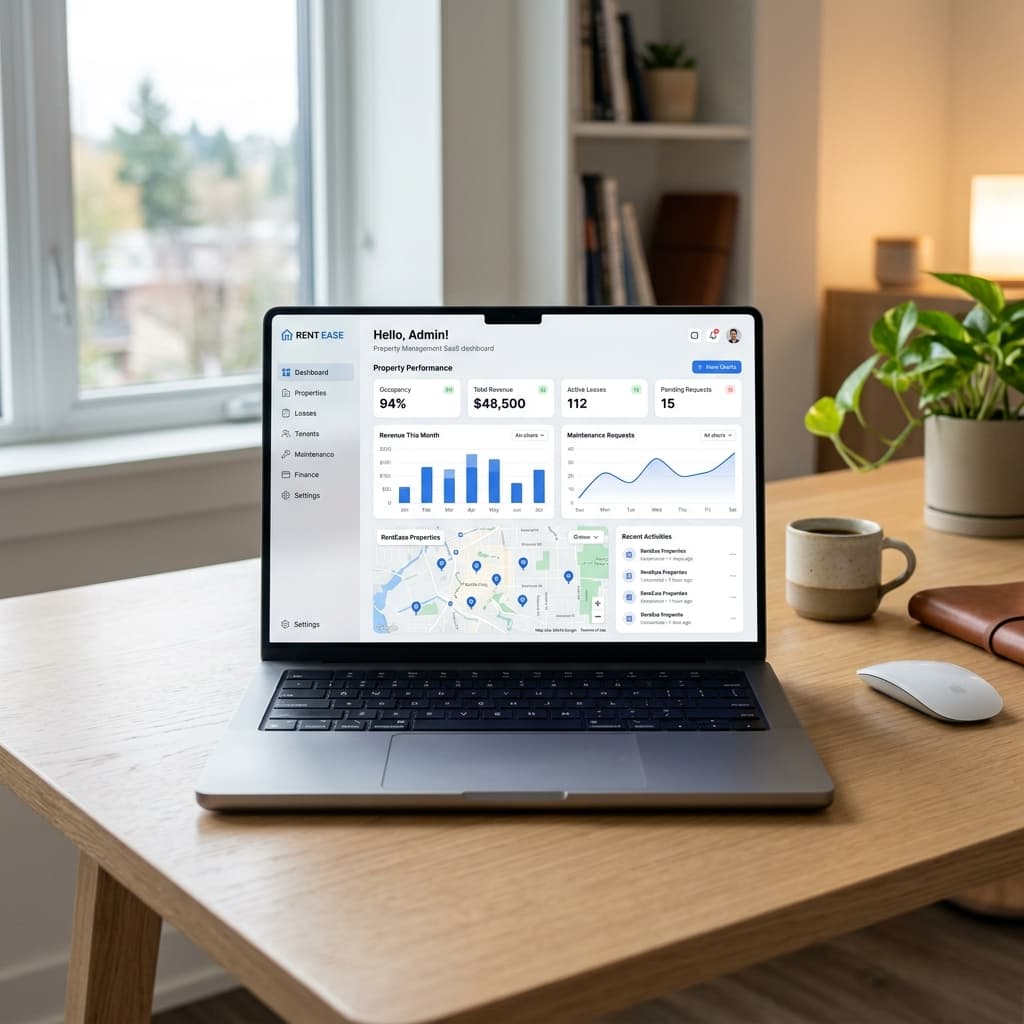
Not all property management software is created equal. And most of it was not created for Uganda.
The global market is full of platforms built for landlords in the United States, the United Kingdom, or Australia. Those are markets where tenants pay by bank transfer, where credit checks are centralised, and where the legal infrastructure assumes things that do not apply here. Importing one of those platforms into the Ugandan context is like bringing a map of London to navigate Kampala. The streets do not match.
So when a Ugandan landlord asks what to look for in a property management platform, the answer is not a generic feature list. It is a Uganda-specific one.
Here are the 6 features that should be non-negotiable in 2026.
Feature #1: Deep MTN and Airtel Mobile Money Integration, Not an Afterthought
This is not optional. It is the single most important technical requirement for any property management software operating in Uganda.
Mobile money has overtaken cash and bank deposits as the preferred method of payment across the country. Uganda had 67.7% mobile connections as a percentage of the total population as of January 2024, and penetration continues to grow. Your tenants are not going to switch to bank transfers to accommodate your software. Your software needs to go where they already are.
But there is a critical distinction most landlords miss: accepting MoMo payments and integrating MoMo payments are completely different things.
Accepting a MoMo payment means a tenant sends money to your personal number. You receive a notification. You manually record the payment somewhere. You try to remember which tenant it was and which month it covers.
Integrating MoMo payments means the platform receives the payment, automatically matches it to the correct tenant, marks the rent as paid, generates a receipt, and creates a timestamped record. You do nothing.
The first is just mobile money. The second is what makes software actually useful.
For cash payments or direct bank deposits, a good system also lets you manually mark an invoice as paid and attach a receipt. Every payment method is covered.
What to look for: Both MTN Mobile Money and Airtel Money integration (not just one), automatic payment-to-tenant matching, real-time notifications to both landlord and tenant, and an automatic receipt for every transaction.
Feature #2: Automated Invoicing and Reminders That Do the Chasing for You
The first five days of every month should not feel like a debt collection exercise. If you are personally sending payment reminders to tenants, you are doing the job that software should be doing for you.
Once a lease is set up, the system should automatically generate the first invoice, and every invoice after that. Reminders should go out before the due date. Overdue alerts should fire when a payment deadline passes. Lease expiry notices should land before either party is caught off guard. All of this happens in the background without you touching it.
There is a benefit beyond convenience: it changes the nature of your tenant relationships. When reminders come from a platform, they are professional and impersonal rather than personal nagging from the landlord. Tenants are less likely to feel harassed and more likely to act. The landlord-tenant relationship stays warmer because the friction is handled by the system.
What to look for: Automatic invoice generation on a set schedule, automatic follow-up reminders for unpaid rent, overdue alerts, lease expiry notifications, and delivery via app and SMS.
Feature #3: Tenant Self-Registration and Onboarding
Adding tenants should not be a bottleneck.
A good system gives you three options: add tenants manually one by one, upload a batch if you are onboarding an existing building, or let tenants register themselves via a portal link you share with them. That third option is underrated. When a new tenant moves in, you send them a link, they fill in their own details, and the system picks it up. Less typing for you, and fewer errors.
Beyond onboarding, tenants should be able to check their own account without calling you. To see whether their last payment was recorded. To access their lease document. To submit a maintenance request at 10pm on a Sunday without feeling like they are imposing.
Every one of those things currently requires a phone call or WhatsApp message in a manually managed property. That friction accumulates over a lease term into quiet dissatisfaction. Uganda's rental vacancy rate averages 9% in premium locations as of 2025. The cost of replacing a good tenant far exceeds the cost of keeping one through a genuinely good experience.
What to look for: Manual, bulk, and self-registration options for tenants; a tenant-facing app or portal where they can view payment history, access lease documents, submit maintenance requests, and communicate with management.
Feature #4: Automated Financial Reporting That Shows Your Real Numbers
Ask most Ugandan landlords how much profit they made from their properties last year. Most will give you a figure that is part calculation, part memory. Very few can point to a monthly profit-and-loss statement or an accurate yield figure per property.
This matters for three reasons.
First, Uganda's rental tax system requires landlords earning above UGX 2.82 million annually to pay 12% on the excess. On top of rental tax, property owners also pay Local Service Tax and Ground Rent. Calculating your tax liability accurately requires knowing your income accurately.
Second, a property that feels profitable and a property that is profitable are often different things. Maintenance costs, vacancy periods, and small cash expenses that never get recorded can quietly eat into a yield that looked strong on paper. You cannot manage what you cannot measure.
Third, if you ever want to take a loan, bring in a partner, or sell, you will need financial records that tell a coherent, provable story.
What to look for: Automatic income tracking per property, monthly profit-and-loss reports, exportable summaries for your accountant, and a dashboard that shows portfolio-wide performance at a glance.
Feature #5: Maintenance Ticketing With a Full Audit Trail
A maintenance request that arrives via WhatsApp and is handled via a phone call leaves no record. No record of when the issue was reported. No record of who was assigned. No record of what it cost. No record of whether the tenant confirmed it was resolved.
In an ideal world, this does not matter. In the real world of disputed deposits, tenant complaints, and insurance claims, it matters enormously.
A proper maintenance ticketing system creates a documented lifecycle for every request: reported, assigned, in progress, completed, cost logged, tenant notified. Every step is timestamped. Every communication is archived.
Beyond documentation, there is a strategic benefit: data. When maintenance costs are tracked against specific properties, patterns become visible. A water heater that has failed three times. A roof that leaks after every heavy rain. These patterns are invisible in a WhatsApp thread and obvious in a maintenance dashboard.
What to look for: Tenant-facing request submission, landlord assignment and tracking, cost logging per request, and exportable maintenance history.
Feature #6: Multi-Staff Access With Granular Permissions
As a portfolio grows, you cannot manage everything alone. You will need a caretaker, an accountant, perhaps a property manager. The question is how to give each person the access they need without giving them the access they should not have.
An accountant needs to see financial records, not lease agreements or tenant ID documents. A caretaker needs to see maintenance requests, not rent payment histories. A property manager might need broader access, but still not the ability to modify financial data.
Role-based access solves this. Each team member gets exactly the view they need and nothing more, so you can delegate without losing control of the financial data. Sharing everything through email or one shared spreadsheet is not only disorganised, it is a security risk.
What to look for: Multiple user accounts under a single landlord account, customisable permission levels per user, and the ability to revoke access instantly.
The Checklist
Before committing to any property management platform, run through this:
- MTN + Airtel MoMo integration: Uganda pays by mobile money. Your platform must too.
- Automated invoicing and reminders: no more chasing rent by hand.
- Tenant self-registration and portal: less typing for you, a better experience for them.
- Automated financial reporting: your real numbers, and a tax figure you can stand behind.
- Maintenance ticketing with audit trail: everything documented, patterns visible early.
- Multi-staff access with permissions: delegate without handing over the whole business.
If a platform cannot check all six boxes, it was not built for the Ugandan market.
Try RentEase Uganda
RentEase Uganda covers most of this list as core function rather than an add-on: MTN and Airtel Mobile Money collection with automatic matching and receipting, invoices generated from the lease, rent-due, overdue and lease-expiry reminders by SMS and email, maintenance tracking with estimated and actual costs, an expense ledger feeding profit and loss per property, and role-based staff access, all in one web dashboard.
Two honest caveats, because a checklist article that only flatters the author is worthless. Tenants do not get accounts or a mobile app on RentEase; what they get is a public page where they look up their own invoices and receipts using a tenant code and a one-time code sent to their phone. And no platform in Uganda, this one included, performs live identity verification against the NIRA register. That interface requires a signed memorandum of understanding and is reserved for banks, telecoms and licensed financial institutions.
This article is for informational purposes only.
Sources
- DataReportal, Digital 2024: Uganda, for mobile connections at 67.7 percent of population in January 2024
- Uganda Revenue Authority, A Simplified Guide on Rental Income, for the 12 percent rate and the UGX 2,820,000 threshold (PDF)
- The Independent, Kampala property occupancy softens amid rising supply, reporting Knight Frank's H1 2025 review