How to Screen Tenants, Handle Maintenance, and Go Digital as a Landlord in Uganda
RentEase Team
17 May 2026
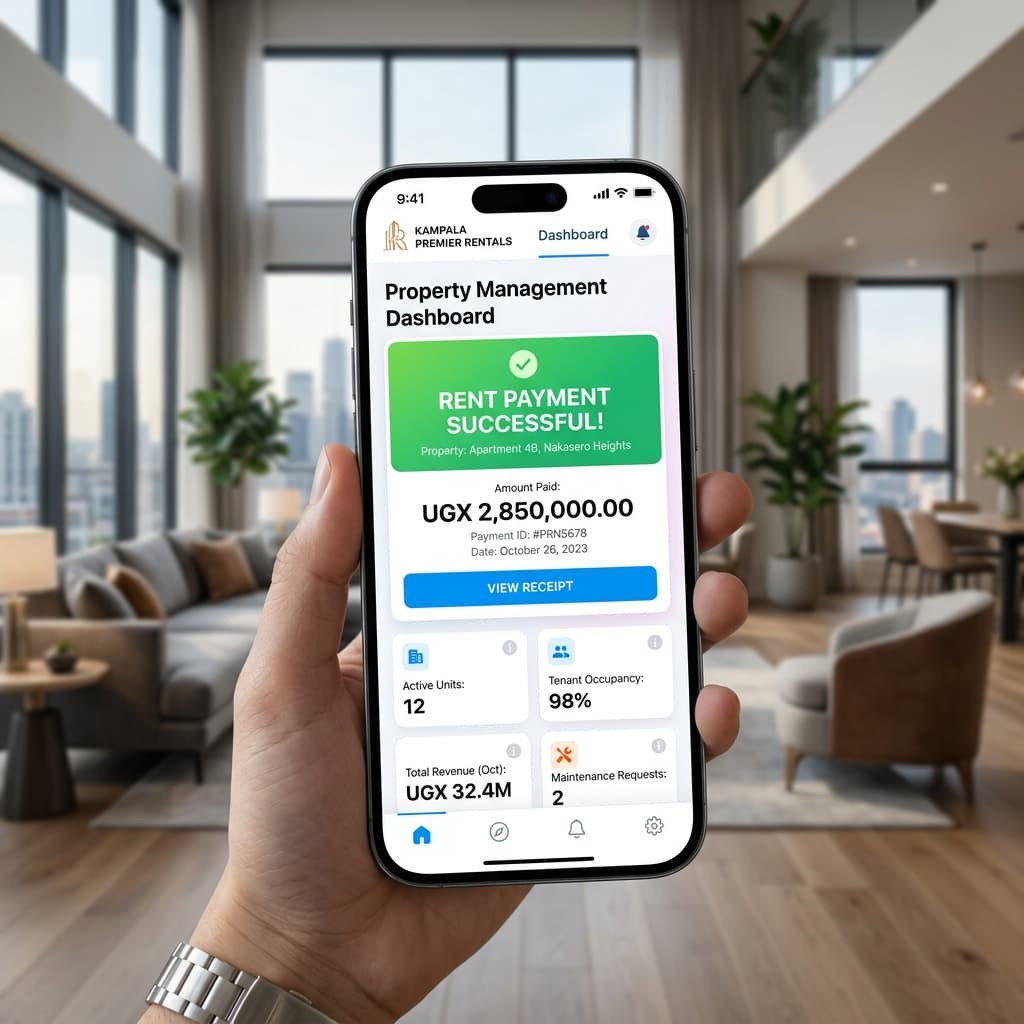
Managing rental property in Uganda has never been simple. Between chasing rent, handling tenant complaints, and keeping paper records in order, it can feel like a second full-time job. But landlords from small operators in Ntinda to larger portfolio owners in Kampala are getting better results by tightening three things: how they choose tenants, how they handle repairs, and how they track everything.
This guide covers all three, with steps you can apply whether you manage two units or twenty.
Part 1: How to Screen Tenants in Uganda
The single biggest factor in how smoothly your rental property runs is the tenant you put in it. A reliable tenant pays on time, maintains the property, and tells you when something needs fixing. An unreliable one costs you money and stress, and in the worst cases a court process.
Screening properly upfront saves you from all of that.
Step 1: Have a Written Application Form
Do not rely on a phone call or a WhatsApp conversation to choose your tenant. Have every applicant fill in a written form that captures:
- Full legal name
- National ID number (NIN)
- Current employer and income
- Previous address and landlord contact
- Next of kin or guarantor details
- Reason for leaving current accommodation
A written form sets a professional tone from the start and gives you a paper trail if issues arise later.
Step 2: Verify Their National ID
This is non-negotiable in Uganda. Ask every applicant to present their National Identification Card. Uganda's National Identification and Registration Authority (NIRA) issues these to all citizens aged 18 and above.
Be precise about what is actually available to you here, because most Ugandan landlord advice gets this wrong. NIRA's *216# code is a citizen-facing self-service channel: a person dials it on their own phone to retrieve their own NIN and registration status. You cannot type a stranger's NIN into it and receive their details. NIRA's real third-party verification runs through a Third Party Interface that requires a written application to the Executive Director, a technical assessment and a signed memorandum of understanding. It is for banks, telecoms and licensed financial institutions, not individual landlords.
What you can do is ask the applicant to dial *216# on their own handset, in front of you, and show you the result. A NIN returned by NIRA to the applicant's own SIM, matching the card in your hand, is a real confirmation and the strongest check a private landlord has. For non-citizens, ask for a valid passport and alien ID card.
Our complete guide to tenant screening and verification in Uganda covers the card security features, the 2026 card-collection backlog, and what to do when an applicant has a NIN but no physical card yet.
Step 3: Verify Income and Employment
A rule used commonly elsewhere, and sensible for Uganda, is that a tenant's monthly income should be at least three times the monthly rent. This gives a basic buffer to cover rent alongside other living costs.
Ask for:
- A payslip or employment letter for salaried tenants
- Bank statements for the last two to three months for self-employed applicants
- Mobile money transaction history can also give you a rough sense of cash flow
This step is especially important given the Landlord and Tenant Act 2022, which caps advance rent at three months. You cannot rely on a large upfront payment to cover future gaps.
Step 4: Contact Their Previous Landlord
Most landlords skip this step. Do not skip it.
Call or visit the previous landlord and ask directly:
- Did this tenant pay rent on time?
- Did they leave the property in good condition?
- Would you rent to them again?
- Why are they leaving?
A previous landlord will usually tell you the truth, especially if they have already had a bad experience. This one phone call can save you months of problems.
Step 5: Meet the Tenant in Person
Before signing anything, meet the prospective tenant at the property. Politeness aside, it gives you a chance to see how they behave, whether they ask sensible questions, and whether they seem serious. It also allows you to explain house rules and expectations before any money changes hands.
Step 6: Apply the Same Process to Every Applicant
This matters both practically and legally. Section 20 of the Landlord and Tenant Act 2022 prohibits a landlord from refusing to rent premises to a person on the grounds of sex, race, colour, ethnic origin, tribe, birth, creed or religion, social or economic standing, political opinion or disability. That is the full statutory list. Using a consistent screening process protects you from claims of unfair treatment and ensures your decisions are based on the same factors every time.
What to Do When You Do Not Have Formal Records
Plenty of Ugandan tenants have no payslip and no formal employment letter, particularly those moving from upcountry or out of informal housing. In these cases:
- Ask for a letter from their LC1 (Local Council) chairperson as a character reference
- Contact their employer directly by phone even without a formal letter
- Accept mobile money statements as an alternative to bank statements
- Consider a guarantor arrangement, where a third party co-signs and takes responsibility if the tenant defaults
Part 2: How to Manage Maintenance Requests Efficiently
Maintenance is the part of property management that most landlords dread. Done badly, it frustrates tenants and damages the property. Done well, it keeps tenants and extends the life of the building.
Maintenance software vendor Oxmaint reports that clients running disciplined preventive maintenance programmes cut total maintenance cost by 30 to 45 percent over twelve to eighteen months, and reduce emergency repair frequency substantially. Treat those as vendor figures rather than independent research. The direction is the useful part, not the decimal.
Here is how to build a system that works.
Set Up a Clear Channel for Requests
Tenants need to know exactly how to report a problem. This should not be your personal WhatsApp number, where a request gets buried under everything else.
Options that work well in Uganda:
- A dedicated WhatsApp group or number for maintenance only
- An email address you check daily
- A notebook kept on-site for properties where tenants do not use smartphones regularly
- A property management app with a built-in maintenance request feature
Whatever channel you choose, make sure every tenant knows it before they move in. Put it in the tenancy agreement.
Prioritise Requests by Urgency
Not every request is equally urgent. A blocked toilet is more serious than a broken window blind. Having a simple priority system prevents you from reacting to everything at the same level of urgency.
A practical three-level approach:
Priority 1, emergency (respond same day): No water, flooding, roof collapse, electrical fault that poses a safety risk, gas leaks, broken door locks.
Priority 2, urgent (respond within 48–72 hours): Hot water not working, partial plumbing failure, broken windows, pest infestation.
Priority 3, routine (respond within 7–14 days): Cosmetic damage, minor leaks, appliance faults that do not affect habitability.
As a landlord, you assign the priority, not the tenant. Tenants will naturally describe everything as urgent.
Build a Short List of Reliable Contractors
In Uganda, finding a trustworthy plumber, electrician, or general handyman you can call at short notice makes a significant difference. Ask neighbours, other landlords in your area, or local property management groups for recommendations.
Once you find contractors who do good work and show up when called, keep their numbers and use them consistently. A reliable contractor who knows your property will work faster and make fewer mistakes than a new face every time.
Keep Records of Every Request
For each maintenance issue, keep a simple record of:
- Date the request came in
- What the problem was
- Who was sent to fix it
- Date it was resolved
- Cost
This protects you in disputes. Under section 9 of the Landlord and Tenant Act 2022, a tenant may carry out urgent repairs without waiting for you at all, and may carry out non-urgent repairs after serving you 14 days' notice of the need and the cost. Either way, if you do not reimburse within 14 days of their notice, they recover the cost from the rent. Keeping your own records of response and resolution times gives you evidence if a tenant claims you were unresponsive.
Communicate With the Tenant Throughout
What tenants complain about most is silence, not slow repairs. Acknowledge every request when it comes in, let the tenant know when a contractor is coming, and confirm when the issue has been resolved. A quick SMS or WhatsApp message at each stage costs nothing and prevents escalation.
Do Seasonal Checks Without Waiting for Requests
Some of the most costly repairs come from problems that build slowly and go unnoticed. Get into the habit of checking your properties every few months:
- Clear gutters before the rainy season (March–May and October–December in Uganda)
- Check roof condition after heavy rain
- Inspect electrical fittings, especially in older buildings
- Look at plumbing connections under sinks and around toilets
Preventive maintenance reduces the number of emergency requests and extends the life of your property.
Part 3: How to Transition from Paper to Digital Property Management
Many landlords in Uganda still manage their properties with notebooks, exercise books, and Excel spreadsheets. This works up to a point, usually until you have more than five or six tenants, or until a notebook gets lost.
Going digital does not mean you need to spend a lot of money or learn complicated software. It means moving your records, communication, and payments into a system that is organised, searchable, and accessible from your phone.
Start With What You Already Have
If you are not ready for dedicated property management software, start by moving existing records into tools you already use:
- Google Sheets to track tenants, rent payments, and balances. Set up one tab per property with columns for tenant name, rent amount, due date, date paid, and balance.
- Google Drive or WhatsApp to store scanned copies of tenancy agreements, ID documents, and receipts.
- Calendar reminders for rent due dates, lease renewals, and inspection schedules.
This alone puts you ahead of a notebook.
Move Rent Collection to Mobile Money
Mobile money is already the most practical payment channel for most Ugandan tenants. MTN Mobile Money and Airtel Money are widely used, and both can be set up to receive payments directly to a registered landlord number.
The advantage over cash: every payment creates a transaction record with a timestamp, meaning there is no dispute about whether rent was paid or when. Keep screenshots of all receipts.
Ask your bank about a business mobile money account, which makes it easier to track income separately from personal funds.
Upgrade to Dedicated Property Management Software When Ready
When your portfolio grows or your manual system starts creating more work than it saves, dedicated property management software becomes worth the investment.
When evaluating any platform, ask:
- Does it support mobile money (MTN and Airtel)?
- Can I access it from my phone?
- What does it cost per unit per month?
- Does it generate receipts and statements automatically?
- Is there local customer support?
Store Documents Digitally From Day One
Every tenancy agreement, ID copy, and inspection report should have a digital copy. You do not need a scanner. A clear phone photograph saved to Google Drive or a dedicated folder works perfectly well.
Label files consistently: [TenantName]_[PropertyUnit]_[DocumentType]_[Date], so for example Nakato_Unit3_Agreement_Jan2026. This makes files easy to find months or years later.
Set Automated Reminders
One of the biggest gains from going digital is replacing mental load with systems. Set calendar reminders for:
- Rent due dates (5 days before and on the day)
- Lease renewal dates. Sixty days ahead is a sensible working default, because that is the notice the Act requires both for ending a year-to-year tenancy and for proposing a rent increase. The Act does not impose a renewal deadline of its own.
- Property inspection dates
- Annual rent review dates
These reminders cost nothing and prevent the common problem of lease renewals being missed or rent increases being applied late.
Putting It All Together
Improving how you manage your property does not have to happen all at once. A practical sequence:
- Create a standard tenant application form this week
- Ask every applicant to confirm their own NIN from their own handset using *216#
- Set up a dedicated WhatsApp number for maintenance requests
- Move your rent records to Google Sheets
- Collect rent via mobile money and save receipts
- When you are ready, look at dedicated property management software
Each step makes the next one easier. Landlords who go through this process consistently find they spend less time chasing problems and more time on other things.
Managing All of This in One Place
If you want to skip the patchwork of spreadsheets and WhatsApp groups, RentEase Uganda brings tenant records, rent tracking, maintenance requests, and digital agreements into a single platform built for Ugandan landlords.
Get started with RentEase Uganda
This article is for general informational purposes. For legal advice specific to your situation, consult a qualified advocate in Uganda.